Running an Architecture Firm is a Probability Game
3 min read
January 2, 2026
Most architects don’t enter the profession expecting to think in terms of probabilities. You’re trained to design, coordinate, problem-solve, and deliver. But once you start running an architecture firm, you quickly realize that success has less to do with single decisions, and more to do with stacking the odds in your favor over time.
Revenue, hiring, marketing, delivery, client retention, none of these are guaranteed outcomes. They are probabilities. And firms that grow consistently understand this, whether consciously or not. Ever wondered why some firms land dream projects after one coffee chat, while others grind for years? It’s not luck, it’s probability at work. Let’s break it down.
In architecture firm management, every line is a calculated bet, stacking the odds for sustainable wins.
Embrace the Odds: Why Architecture is Inherently Probabilistic
Running an architecture firm isn’t linear, it’s a series of high-stakes bets. Consider marketing efforts: a podcast episode or industry event might yield zero leads today, but plant seeds for a multimillion-dollar contract years later. Research shows it takes an average of eight touchpoints for clients to commit, with conversion timelines stretching from weeks to two years.
This probabilistic nature extends to core areas:
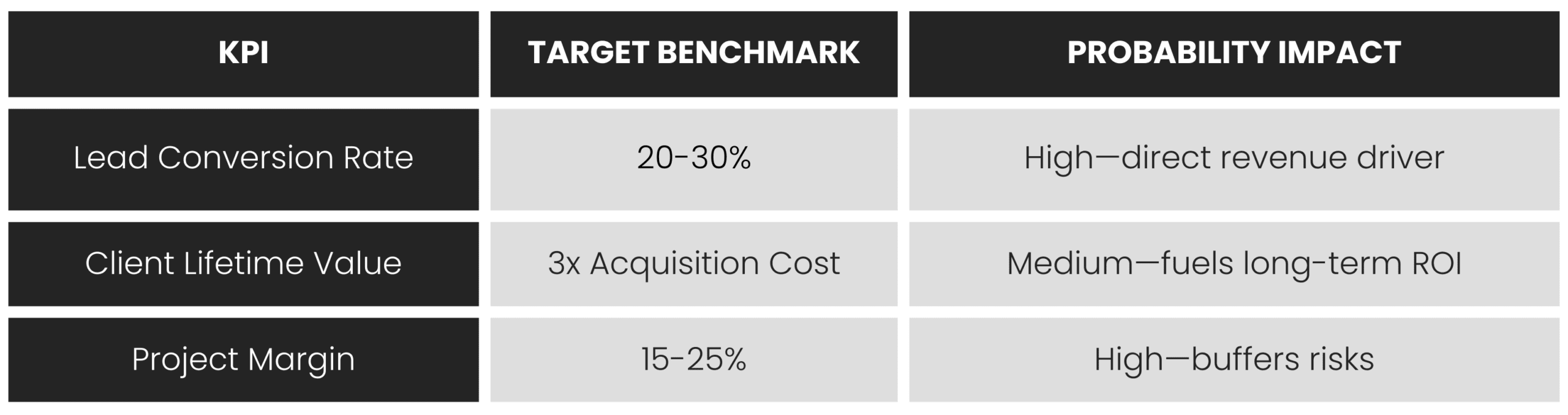
Project Acquisition: Not every RFP response lands the job. Success rates hover around 20-30% for established firms, per industry benchmarks.
Talent Retention: Hiring top architects? Attrition can hit 15-20% annually without targeted strategies like career pathing.
Financial Forecasting: Budget overruns occur in 30% of projects, but proactive KPIs keep variances under 5%.
The key mindset shift? Stop seeking 100% assurances. Instead, assess probabilities based on past data. A sponsorship with a 60% historical success rate in your niche? That’s a green light. This approach aligns with architecture firm success strategies, turning volatility into velocity.
Tilt the Odds with Proven Business Development Strategies
Stack the deck strategically: Proven tactics in architecture business development turn low-odds plays into consistent revenue streams.
High-ranking architecture firms don’t gamble blindly, they stack the deck. Here are actionable tactics to boost your win rates:
Start with multichannel marketing: Podcasts, speaking gigs, and LinkedIn outreach: each is a low-cost experiment. Track metrics like lead quality and conversion rates to refine. For instance, if event sponsorships deliver 100-500% ROI on long-term clients, double down. Tools like CRM software can log those eight essential touchpoints, ensuring no opportunity slips.
Quick Tip: Start small. Allocate 10% of your budget to A/B testing email campaigns. What headlines convert 2x better? Data reveals patterns fast.
Build a Pipeline of Calculated Risks: Persistence pays in architecture business development. Aim for 50+ qualified leads quarterly, knowing only 10-15% may close. Use probability models: score prospects on fit (e.g., 70% match on project type and budget) before investing time.
Firms excelling here integrate cross-selling, pairing documentation services with design phases yields 25% higher retention. At MGS Global Group, our 24/7 support model exemplifies this, reducing client drop-off by focusing on high-probability partnerships.
Leverage KPIs for Smarter Decisions: Blind faith in gut instincts? Not sustainable. Monitor these architecture firm growth indicators:
Utilization Rate: Target 75-85% to maximize billables without burnout.
Net Promoter Score (NPS): Above 50 signals strong referrals, your highest-probability revenue source.
Pipeline Velocity: Measure time from lead to close, under 90 days keeps cash flow steady.
Regular audits turn these into probabilities: a dipping utilization rate flags overcommitment, prompting resource reallocations.
These metrics aren't just numbers, they're your probability compass.
Cultivate High-Probability Partnerships: Alliances with engineers, contractors, or sustainability consultants can multiply leads by 2-3x through referrals, turning one-off projects into ecosystem wins. In a field where 40% of new business stems from trusted networks, vet partners on shared values and past collaboration success rates to avoid low-yield ties.
Quick Tip: Map your top 10 prospects’ ecosystems, aim for 3 joint pitches quarterly. Track referral conversion at 25%+ to refine alliances.
Real-World Wins: Lessons from Architecture Firm Leaders
Take Gensler or HOK — titans who’ve scaled by treating growth as probabilistic. Their secret? Diversified streams: 40% from repeat clients, 30% referrals, 30% new pursuits. Smaller firms mirror this by niching down, sustainable design specialists see 40% faster lead gen in eco-focused markets.. What about talent? Firms with structured retention plans (e.g., mentorship programs) cut turnover by 35%, freeing resources for high-probability projects. In a field where 70% of success ties to team execution, this is non-negotiable.
Final Thought
Architecture firm management boils down to this: Consistency compounds probabilities. Stay patient through dry spells, consistent in outreach, and persistent in learning. The firms that endure aren’t flawless, they’re adaptable.
Ready to audit your odds? Review one marketing channel this week: What’s its historical hit rate? Adjust, test, repeat.
For tailored architecture business strategies, drafting, and construction documentation needs, let’s talk.
Enjoyed this post?
Explore more resources here or book a quick call to learn how MGS Global Group can support your drafting and construction documentation needs.