






Why Your Architecture Firm Needs a Project Handover Checklist
- 4 min read
- November 26, 2026
Quick question: if your project lead went on vacation tomorrow, could anyone else pick up their project without calling them?
If you hesitated, you’re not alone. Most architecture firms run on “it’s in someone’s head.” That works fine until a project changes hands, and then things start falling through the cracks.
This guide shows where handovers break and gives you a ready to use project handover checklist to fix it.
Sound Familiar?
See if any of these have happened at your firm:
- The contractor asks why the stair moved, and nobody remembers.
- Two versions of the door schedule are floating around. Both say “final.”
- The client mentions a promise from a meeting six months ago. It never made it into the minutes.
- A consultant’s revised drawings were due last week. Nobody knew the team was waiting on them.
Every one of these is a handover problem. The drawings usually survive the trip. The why behind them often doesn’t.
And it adds up. Research by FMI and PlanGrid found that 48% of all rework on US construction jobsites comes from miscommunication and poor project data.
What Is a Project Handover in Architecture?
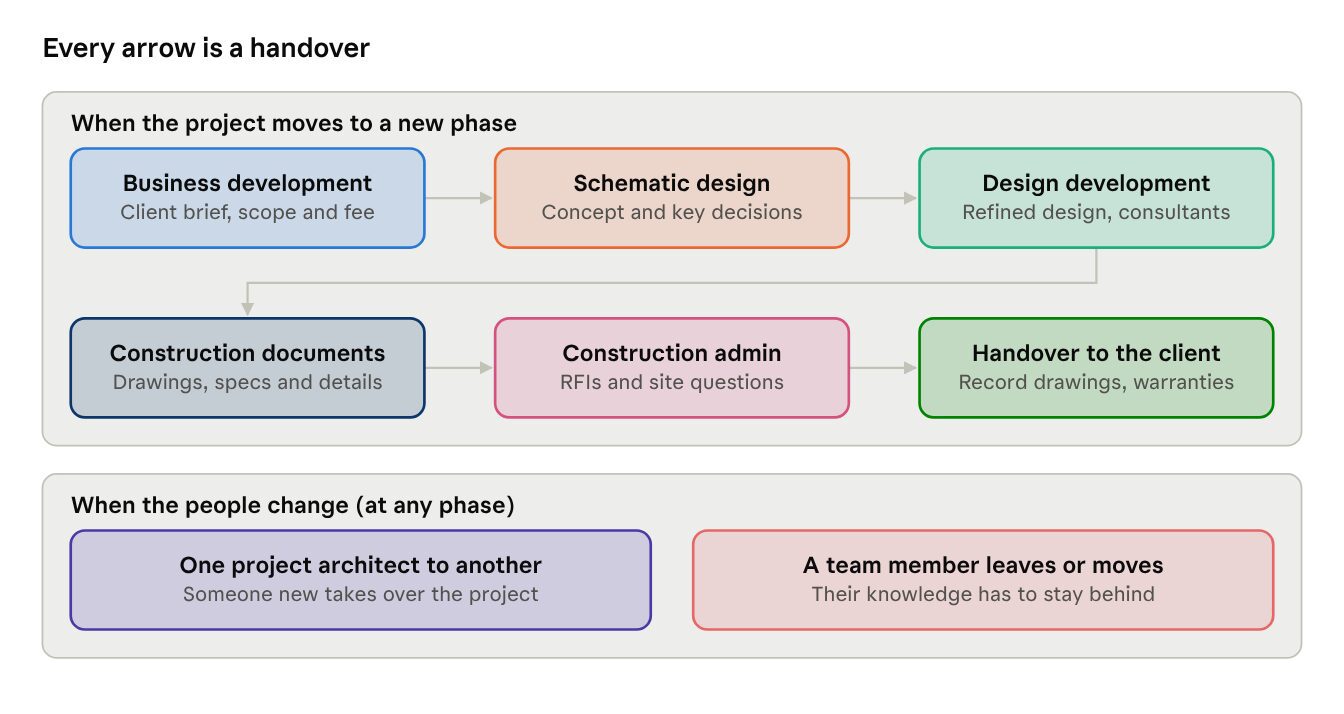
A project handover is the transfer of project information, documents, responsibilities and next steps from one person, team or phase to another. The goal is continuity: nothing important should stay behind with the person or team that hands the work over.
In an architecture firm, handovers happen more often than most people realize:
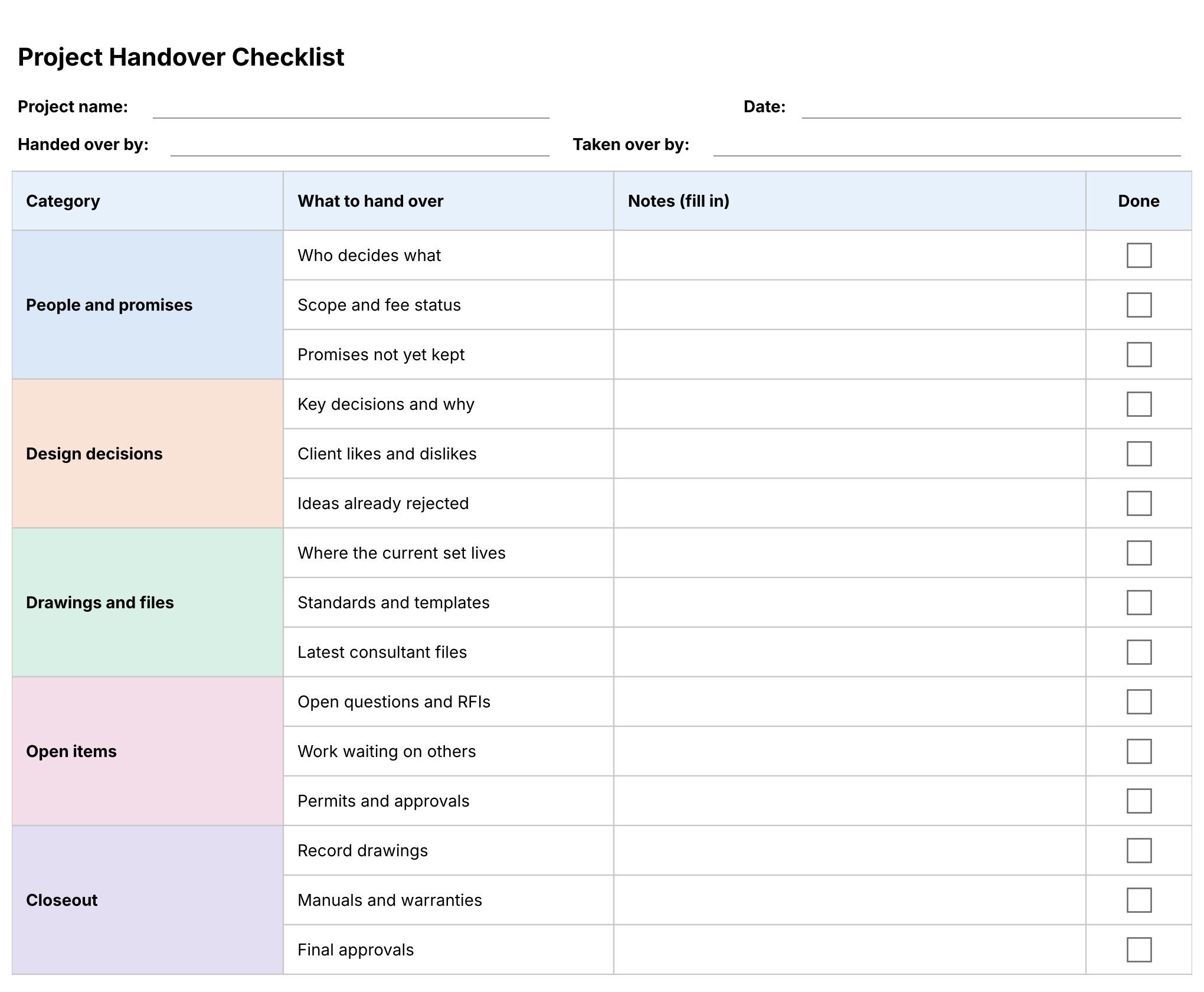
Your Project Handover Checklist
How to use it: The person handing over fills in the notes for every row before the handover meeting. The person taking over ticks a box only once they fully understand it.
Tip: Be specific in the notes. Instead of “fee status,” write “80% of the DD fee is billed, landscape not yet signed.” Instead of “permits,” write “Building permit submitted Oct 15, no comments back yet.”
The closeout rows are your construction document handover. It’s often the final impression you leave on a client, and owners remember it when they hire again.
3 Habits That Make Handovers Easy
1. Hold a real handover meeting. Book 60 to 90 minutes at every phase change. Walk through the checklist together, with the outgoing and incoming leads on the same call.
2. Keep a decision log. One shared document that records what was decided, when, by whom, and why. Team rule: if it isn’t in the log, it didn’t happen.
Not sure how to start one? Copy this simple format:
3. Hold a real handover meeting. Book 60 to 90 minutes at every phase change. Walk through the checklist together, with the outgoing and incoming leads on the same call.
5 Questions to Ask in Every Handover Meeting
The checklist covers the facts. These questions catch what the checklist misses:
- What is the one thing about this project that keeps you up at night?
- Which decisions might the client try to reopen?
- Who on the client side actually makes the call, and who just talks the most?
- What did we promise that isn’t written down anywhere?
- If you were staying on this project, what would you do next week?
Quick Quiz: How Healthy Is Your Handover?
Answer yes or no:
- Could a new team member answer the client’s top three questions after one day with the project files?
- Does everyone know which drawing set is current, right now?
- Has your team gone a whole month without reopening a settled decision?
3 yes: Your handovers are in great shape. Share this checklist with your team anyway.
1 or 2 yes: You have a few leaks. Start a decision log this week.
0 yes: Time to act. Use the checklist on your very next phase change.
Conclusion: A Good Handover Protects Your Design
A handover isn’t paperwork. It protects your design intent, your fee and your reputation with clients and contractors.
At MGS Global Group, we understand the importance of organized documentation and reliable project workflows. Through our architectural drafting services and architecture production support, we help architecture firms manage their production workloads and keep projects moving.
Want to know more about how we support architecture firms? Visit MGS Global Group.
Enjoyed this blog? Give a thumbs up or leave a comment!
Explore more resources here or book a quick strategy call to learn how MGS Global Group can support your drafting needs.